In the media · MyBroadband · 27 July 2026
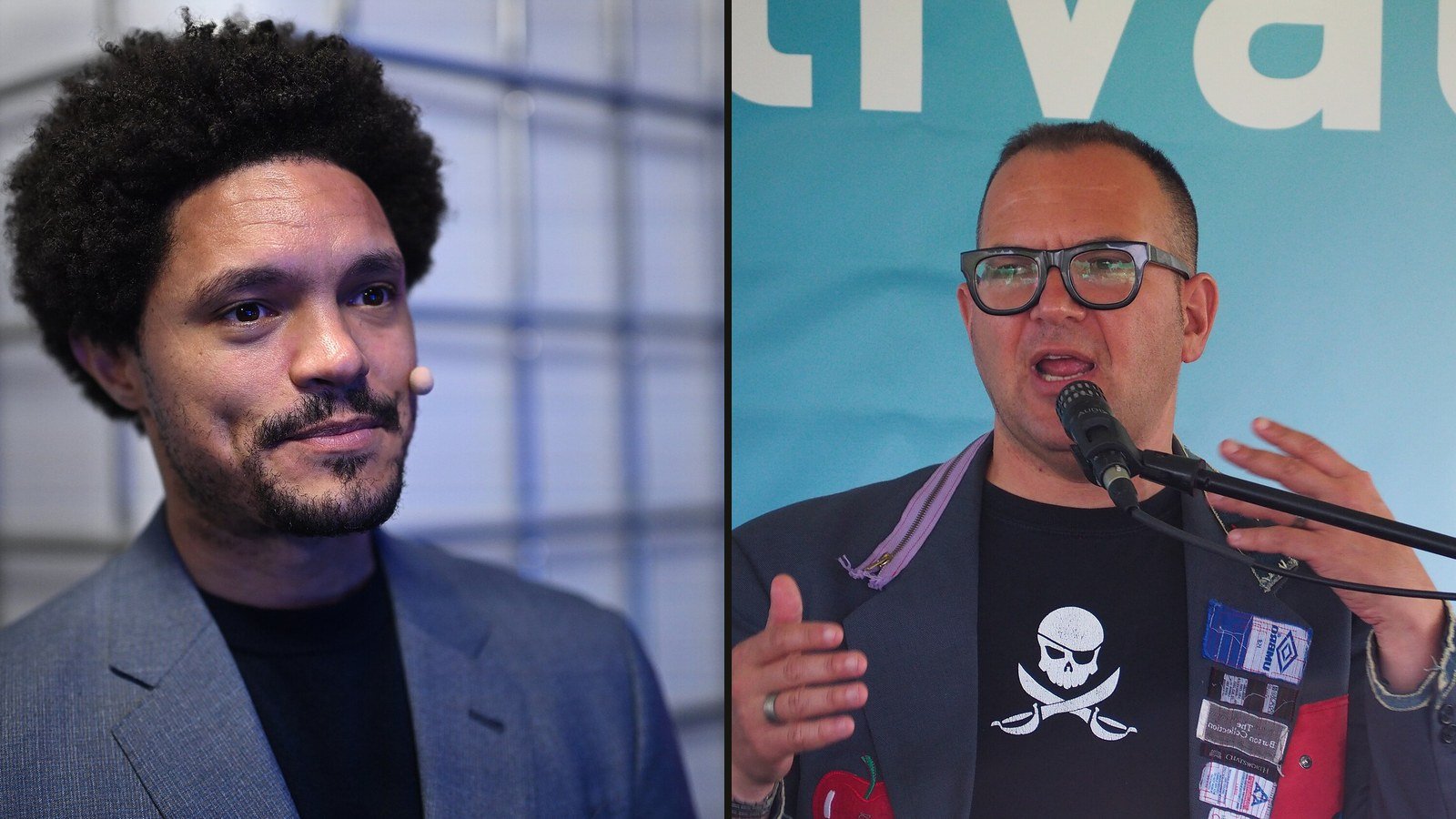
Cory Doctorow — science-fiction author, activist and special adviser at the
Electronic Frontier Foundation — has told Trevor Noah on the
What Now? podcast how the United States tried to pressure South Africa into stripping fair
use out of the Copyright Amendment Bill. MyBroadband’s Jan Vermeulen tells the whole story, from
the 2019 trade petition to the Constitutional Court’s judgment last month.
Read the article on MyBroadband
Our timeline of the Bill
What the article says
The Copyright Amendment Bill, first tabled in 2017, widened South Africa’s narrow “fair
dealing” rules into a fair use standard modelled on American law — with the four familiar
factors, plus an explicit requirement to credit the author where possible. It also added specific
exceptions for teaching, for libraries, archives and museums, and for parody and satire.
In April 2019 the International Intellectual Property Alliance, which represents American
copyright industries, petitioned the US Trade Representative to suspend South Africa’s trade
benefits unless the Bill was changed, calling the fair use clause an “ill-considered
importation”. In October 2019 the USTR opened a review of South Africa’s eligibility under
the Generalized System of Preferences, and held hearings in January 2020.
“South Africa’s latest round of updates to the copyright law
included an expansion of the limitations on copyright to match the American set — what we call
‘fair use’ here.”Cory Doctorow, on What Now? with Trevor Noah
Doctorow’s point is the irony of it: South Africa was being threatened with trade
consequences for adopting a doctrine that comes from the United States. As he put it, the
message from Washington amounted to: “No, that American policy is very extreme, and you
shouldn’t have it here in South Africa.”
American technology, library and public-interest organisations made the same argument at the
hearings, and Professor Sean Flynn urged the USTR not to sanction South Africa over a Bill
containing “a U.S.-style fair use clause”. No trade benefits were ultimately withdrawn,
and the authorisation for the whole GSP programme lapsed at the end of 2020 in any case.
Why it matters to us
This is the part of the story that rarely makes the front pages. The Bill has been delayed for
years — sent back by the President in June 2020, reworked through further provincial and
public hearings, passed again on 29 February 2024, then referred to the Constitutional Court in
October 2024. On 26 June 2026 the Court
upheld
fair use while striking down parts of the broader educational exceptions. ReCreate has
called for
the remainder of the Bills to be enacted quickly.
Throughout that period, South African creators, teachers, librarians and disability
organisations were arguing their case at home while foreign industry lobbies argued against them
abroad. The record of that lobbying is public: POLITICO reported on the
American and European pressure on the Presidency in 2020,
and Knowledge Ecology International published
311 pages of correspondence between the USTR and industry
groups obtained under freedom-of-information law.
Source: Jan Vermeulen, “America tried to interfere in South African
copyright law”, MyBroadband, 27 July 2026, reporting an
interview on What Now? with Trevor Noah. We link to
coverage we think is worth reading; ReCreate is not responsible for its contents.
More on this campaign: In the media · The Copyright Amendment Bill · Legal archive · Resources · Take action
Author and activist Cory Doctorow — photograph by Frypie, via Wikimedia Commons, CC BY-SA 4.0 · Comedian and broadcaster Trevor Noah — photograph by Montclair Film, via Wikimedia Commons, CC BY 2.0