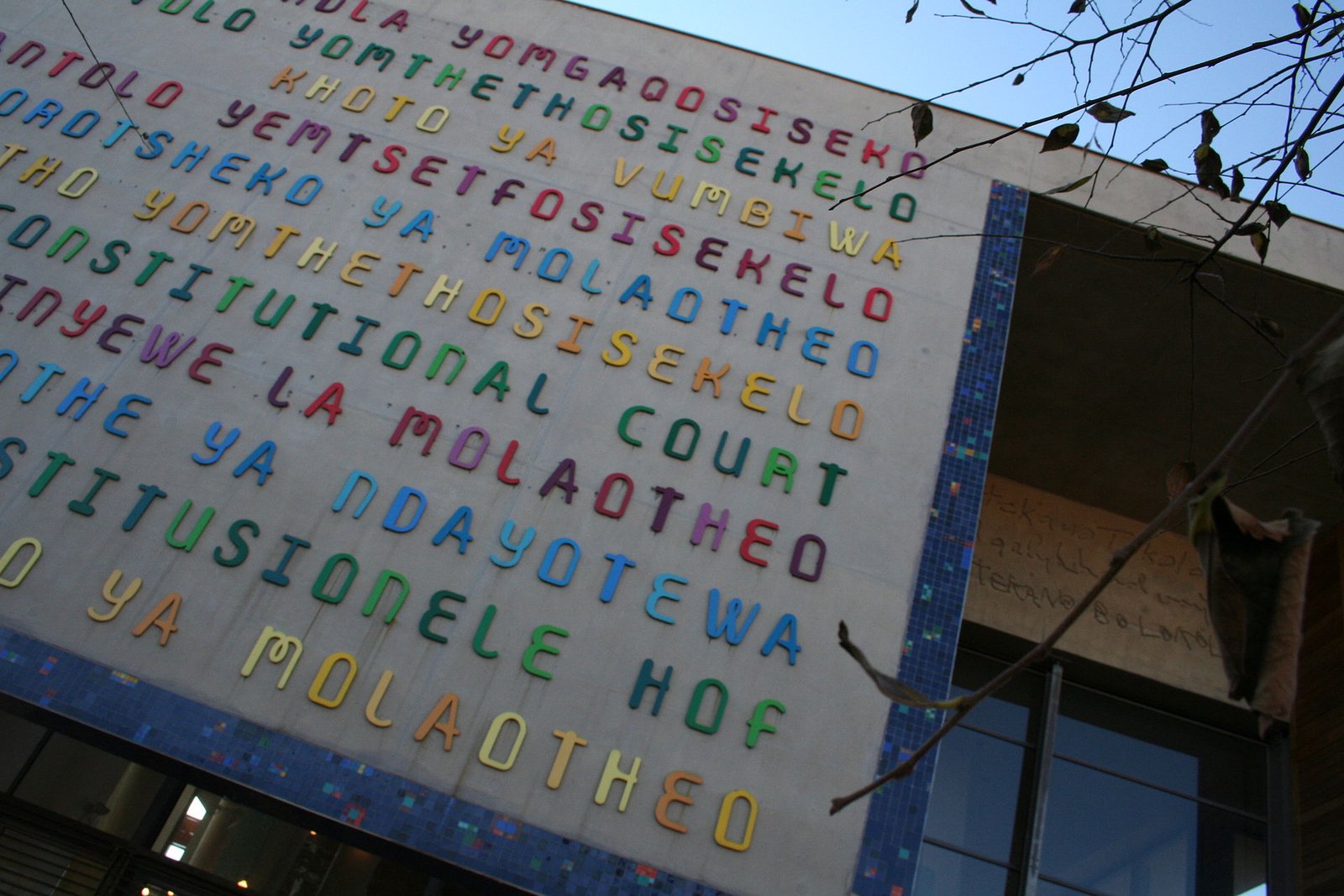
On Friday 26 June 2026 the Constitutional Court handed down judgment on the Copyright Amendment Bill and the Performers’ Protection Amendment Bill. The Court upheld fair use and most of the new exceptions. It struck down one set of education exceptions, which means Parliament must fix the Bills before the President can sign them.
Read ReCreate’s statement on the judgment
What the Court decided
The case, Ex parte President of the Republic of South Africa: In re Constitutionality of the Copyright Amendment Bill and the Performers’ Protection Amendment Bill (CCT 306/24, [2026] ZACC 26), came to the Court because the President referred the two Bills to it in October 2024 rather than signing them. The majority judgment was written by Justice Mhlantla, with Justice Majiedt dissenting. The Court heard argument on 21 and 22 May 2025.
- Fair use is constitutional. The Court held that the fair use standard in section 12A is not vague, and that the limit it places on copyright owners is neither arbitrary nor a breach of the property clause in section 25(1) of the Constitution.
- Most other exceptions survive. Sections 12B and 12C (quotation, news reporting, translation, personal use, temporary copies), sections 12D(6)–(9) (academic work, theses, publicly funded research), section 19B (computer programs and interoperability) and section 19C (libraries, archives, museums and galleries) were all upheld.
- The broad education exceptions fall. Sections 12D(1)–(5), which would have allowed extensive copying of textbooks for teaching, were declared an arbitrary deprivation of property and therefore unconstitutional.
- The royalty provisions were not decided. The referral in respect of sections 6A, 7A and 8A — the equitable-royalty rights for authors and performers — was found to be incompetent, so the Court did not rule on them.
- The same orders apply to the Performers’ Protection Amendment Bill.
The Court also confirmed, for the first time, that copyright is a form of property protected by section 25 of the Constitution — and that copyright exceptions in the public interest can still be constitutional.
What happens next
Because part of the Bill was found unconstitutional, the President may not sign it as it stands. The Bills go back to Parliament, which must repair section 12D before they can be sent for assent again. Nothing changes in the meantime: the Copyright Act of 1978 and the Performers’ Protection Act of 1967 remain the law, and the accessible-format problem the Court identified in BlindSA in 2022 still has to be fixed by legislation.
This was also the first time the Constitutional Court has reviewed the substance of a Bill before it became law. Because the review was limited to the reservations the President raised, the Court was clear that further challenges remain possible once the legislation is enacted.
Read more
- Constitutional Court case page and media summary (CCT 306/24)
- Full judgment (PDF)
- ReCreate’s legal archive — our written submissions, legal opinions and the court papers in this case
- Timeline of the Copyright Amendment Bill
More on this campaign: In the media · The Copyright Amendment Bill · Legal archive · Resources · Take action
The entrance to the Constitutional Court of South Africa at Constitution Hill — photograph by Wikimedia Commons contributor, via Wikimedia Commons, CC BY 2.0