ReCreate statement · 13 July 2026
ReCreate welcomes the Constitutional Court’s judgment affirming the constitutionality of the overwhelming majority of the Copyright Amendment Bill (CAB) and the Performers’ Protection Amendment Bill (PPAB). In particular, we welcome the Court’s confirmation of the constitutionality of the fair use provisions, a landmark reform that brings South Africa’s copyright framework closer to constitutional values, international best practice and the needs of a modern, knowledge-based society. We also acknowledge the Court’s endorsement of the exceptions for libraries, archives, museums and galleries, and S12D (6) – (9).
Download the statement (PDF)
What the Court decided
Legal archive
ReCreate participated in these proceedings as amicus curiae, supported by more than twenty organisations representing an exceptionally broad coalition of South African society. Those supporting ReCreate’s application included organisations from the creative sector, such as SAGA, IDAA, MMU, SAFAITS and Authors Alliance; educators and higher education institutions, such as SADTU, NAPTOSA, SARUA, LIASA and CHELSA; access to knowledge and digital rights organisations including Wikimedia South Africa, Creative Commons South Africa, APC, R2K, IFLA and Data Science for Social Impact at the University of Pretoria; and disability rights organisations including HEDSA, SANDA, the Wits Centre for Deaf Studies and SADA. This coalition reflects the breadth of support for balanced copyright reform across South Africa and sits alongside the longstanding advocacy of organisations including COSATU, Blind SA and SECTION27.
While we are disappointed that the Court found sections 12D (1) – (5), relating to educational exceptions, to be unconstitutional, we note that this finding affects only a limited portion of the legislation. The judgment leaves most of the text in the Bills intact, providing a clear foundation upon which Parliament and the Executive can finalise these long-overdue reforms.
For more than a decade, creators, performers, educators, researchers, libraries, archives, museums, galleries, persons with disabilities and the broader public have waited for this legislative process to yield urgently needed results. Further delays would only prolong uncertainty and deny South Africans the benefits that these reforms were designed to deliver.
ReCreate therefore calls on the Department of Trade, Industry and Competition (DTIC), the Presidency and Parliament to work together urgently to identify the most appropriate constitutional and legislative pathway to address the Court’s concerns regarding sections 12D (1) – (5), while ensuring that the remainder of the Bills can proceed without unnecessary delay. We support seeking constitutional legal advice to determine the most effective mechanism for achieving this objective.
The Constitutional Court’s endorsement of fair use represents a significant victory for balanced copyright reform. Fair use will strengthen creativity, research, innovation and access to knowledge, while maintaining appropriate protections for rightsholders. We encourage all stakeholders to build on this strong constitutional foundation rather than reopening settled aspects of the Bills that have already undergone years of extensive public consultation and parliamentary scrutiny.
At the same time, ReCreate remains committed to ensuring that access to education remains at the centre of copyright reform. We believe that the constitutional concerns identified by the Court can be addressed through targeted amendments that preserve the broader objectives of expanding equitable access to learning materials and advancing the constitutional rights to education, equality and dignity. In the interim, the constitutional framework provides important protections for educational and research uses, while the accessible-format exception secured through the Blind SA litigation remains fully operational for persons with disabilities.
We also welcome the continued protections afforded to blind, visually impaired and persons with other disabilities through the Constitutional Court’s earlier decisions, which ensure that accessible-format copies remain lawful. These protections must remain secure as the legislative process reaches its conclusion.
ReCreate believes this judgment should mark the beginning of the final phase of copyright reform, not another prolonged period of legislative uncertainty. South Africa now has a clear constitutional mandate to proceed with targeted amendments to the limited provisions identified by the Court while advancing the broader reforms that have received constitutional endorsement.
We remain committed to working collaboratively with government, Parliament, creators, performers, educators, civil society and all stakeholders to ensure that South Africa finally adopts a copyright framework that is fair, balanced, constitutional and fit for the twenty-first century.
For media and other enquiries: Kyla +27 72 57 9635 |
recreateza@gmail.com
Annexure
Organisations signed onto ReCreate Action’s amicus curiae at the Constitutional Court
hearing on the CAB & PPAB:
- The South African Democratic Teachers Union (SADTU)
- The South African Guild of Actors (SAGA)
- The National Professional Teachers’ Organisation of South Africa (NAPTOSA)
- International Directors Association Africa (IDAA)
- The Southern African Regional Universities Association (SARUA)
- Higher and Further Education Disability Services Association (HEDSA)
- South African National Deaf Association (SANDA)
- The Wits Centre for Deaf Studies
- Music Makers United (MMU)
- Authors Alliance on behalf of its South African members
- The South African Finishing Artists and Imaging Technicians Society (SAFAITS)
- Data Science for Social Impact (DSFSI) at the University of Pretoria
- Library and Information Association of South Africa (LIASA)
- Committee for Higher Education Libraries of South Africa (CHELSA)
- Wikimedia South Africa
- The Association for Progressive Communications (APC)
- Right to Know Campaign (R2K)
- The International Federation of Library Association (IFLA)
- South African Disability Alliance (SADA)
Additional organisations publicly supporting the enactment of the Copyright Amendment Bill
and Performers’ Protection Amendment Bill:
- Congress of South African Trade Unions (COSATU)
- Blind South Africa
- Section 27
The judgment itself is Ex parte President of the
Republic of South Africa: In re Constitutionality of the Copyright Amendment Bill and the
Performers’ Protection Amendment Bill (CCT 306/24, [2026] ZACC 26), handed down on
26 June 2026.
More on this campaign: Statements · The Copyright Amendment Bill · Legal archive · Resources · Take action
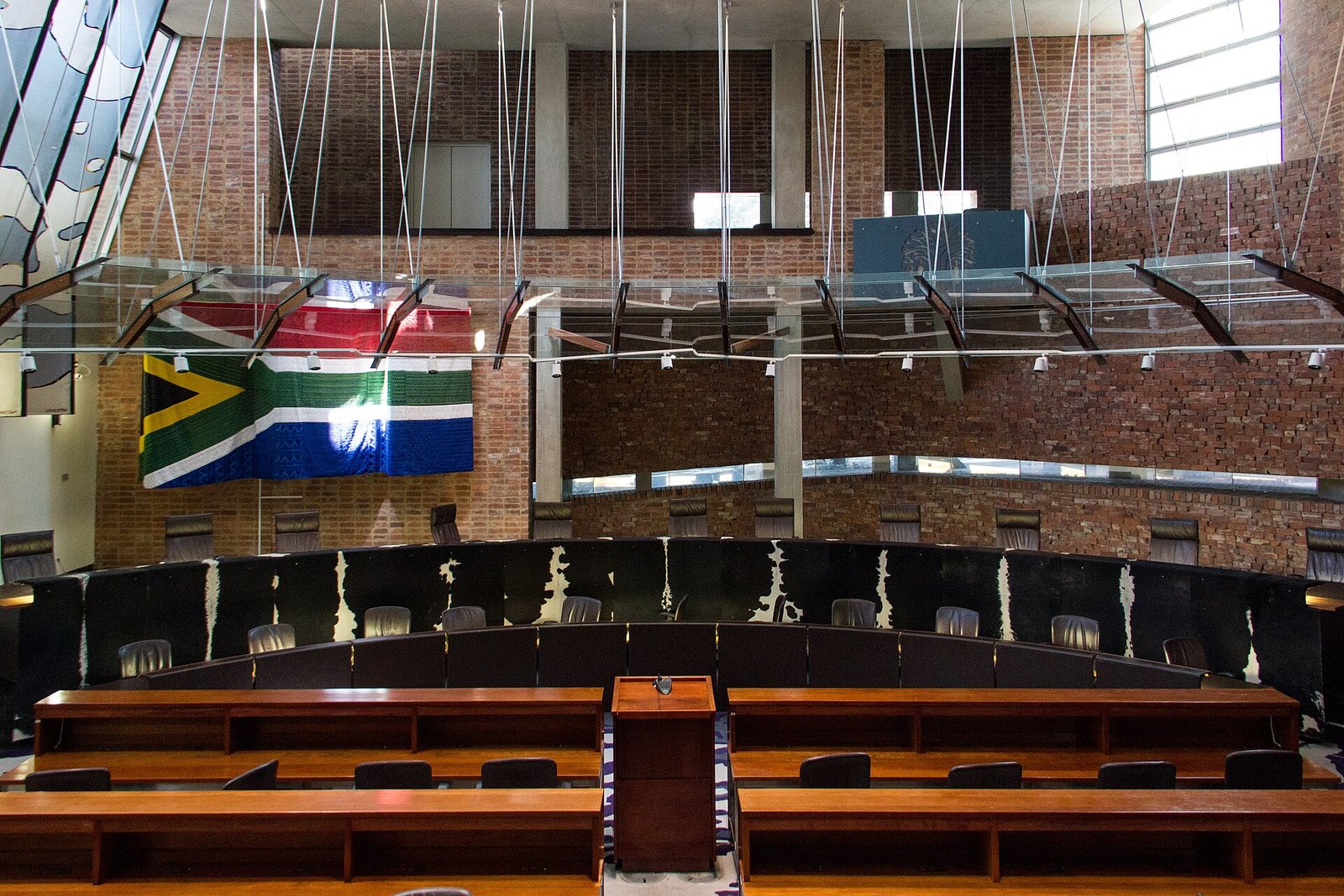
The Constitutional Court of South Africa at Constitution Hill, Johannesburg — photograph by Wikimedia Commons contributor, via Wikimedia Commons, CC BY-SA 3.0