Pretoria R2R

Provisional Programme: Pretoria 23-24 Jan 2023

Back to Main Programme

All times are in SAST


Download PDF version

Monday, 23 January University of Pretoria Conference Centre (Sanlam Auditorium)
09.00 – 09.30 Welcome and Introductions

Professor Tawana Kupe, Vice Chancellor, University of Pretoria
Dr. Carlos Correa, Executive Director, South Centre

Format of panels
Each panel will be led by a moderator who will ask each panelist to comment for a
maximum of 5-6 minutes on a first question or two (noted below). A roundtable
discussion will then allow each speaker and the discussants to add additional issues
into the discussion.
09.30 – 11.20 Session 1: Digital research tools – what’s happening in Africa?

See video recording

From Cape Town to Casablanca, African researchers are using technology to
access, analyze and make use of digital materials, including those protected
by copyright. Using computational methods they can reach vast new
audiences in African languages and they can ask complex and pressing
questions that face the continent. What problems do African researchers seek
to address and where do they find the data?
Chair: Ben Cashdan, Executive Producer, Big Debate South Africa
Director, Black Stripe Foundation. Co-Founder ReCreate South Africa

The Masakhane case study of Text and Data Mining: Why did researchers use
Jehovas Witness bibles to train translation tools, and what was the response
from the publishers?
Kathleen Siminyu, Masakhane, Kenya

How can Natural Language Processing and computational methods help to
get accurate information to underserved communities in African Languages?
What happens when researchers try to translate news websites and
government information?
Prof. Vukosi Marivate, Chair Data Sciences, University of Pretoria (UP)
From Senegal to France and back: Can African researchers access Academic
Publications in Africa to do advanced and comparative research?
Prof. Abdou Beukeu Sow, Head of Documentary Information Department,
University of Dakar, Senegal

Is there a Climate Copyright Catastrophe when it comes to understanding
climate change and supporting farmers? When data providers erect paywalls,
what can be done?
Dr John Olukuru, iLab Africa, Strathmore University, Kenya

How has the constitutional court judgment in South Africa cleared the way for
Text to Speech technology to be used for Visually Impaired people?
Christo de Klerk, Vice President BlindSA

Discussants:
Betsy Muriithi, Research Fellow, iLabAfrica, Kenya
Dr Angeline Wairegi, Senior Researcher, CIPIT, Kenya

11.20 – 11.40 Tea Break
11.40 – 13.30 Session 2: Does Africa have a Right to Research in Law?

See video recording

Every copyright law in the world has at least one limitation or exception that
permits uses of protected works for a “research,” “scientific,” or “private”
purpose. But many of these exceptions were drafted in the pre-digital period
and fail to enable modern research technologies. Many African countries are
currently amending their copyright laws, partly to tailor them to the digital
environment. Where are current African copyright laws flexible enough to
enable modern research needs? Where is further reform needed to promote
innovation, access to knowledge and development through research?
Chair: Prof. Malebakeng Forere Associate Professor in Law,
University of Witwatersrand

How open are research exceptions in Africa compared to other regions of the
world? What is the impact of these exceptions as shown in the empirical
literature?
Prof. Sean Flynn, PIJIP Director, American University Washington College of
Law

What rights do researchers from the Masakhane Case Study have to use the
Jehovah’s Witnesses corpus to train natural language processing tools?
Dr Melissa Omino, Acting Director, Centre For Intellectual Property And
Information Technology Law (CIPIT), Strathmore University, Nairobi

How are research exceptions similar and different in Kenya, South Africa, and
Ghana?
Chebet Koros, Senior Researcher, CIPIT

What is the right to research in International and South African human rights
law? What are the implications for copyright exceptions in Africa?
Dr Sanya Samtani, SARCHI Chair, International and Constitutional Law,
University of Pretoria (UP)

What principles should guide African governments in realising the Right to
Research in Africa?
Dr Chijioke Okorie, Centre for Intellectual Property Law, UP

How is the new Brazilian government proposing to protect the right to
research through copyright exceptions in relation to Artificial Intelligence and
TDM?
Prof. Allan Rocha, Federal University of Rio De Janeiro

Discussants:
Cynthia Nzuki, Research Assistant, CIPIT, Kenya
Dr Andrew Rens, Senior Researcher, ICT Africa
Klaus Beiter, NorthWest University (TBC)

13.30 – 14.50 Lunch
14.50 – 16.50 Session 3: African Leadership on Copyright and the Public Interest

See video recording

In international and domestic fora, African policy-makers are promoting legal
and policy reform to ensure that copyright promotes the public interest.
These reforms include measures to ensure both that creators are fairly
compensated and that users can research, educate, and innovate to the
benefit of the public at large. What reforms are African policy-makers
promoting internationally at WIPO and domestically that promote the
interests of researchers, the libraries and other institutions that serve them,
and their audiences including students, other researchers, and the public at
large.
Chair: Dr. Viviana Muñoz-Tellez, Programme Coordinator, South Centre

How is Africa leading the discussions on copyright and development in WIPO,
including on issues of copyright limitations and exceptions and on the
protection of traditional knowledge?
Mohamed Bakir, First Secretary, Permanent Mission of Algeria to UNOG (tbc)
Georges-Rémi Namekong, Minister-Counsellor, Permanent Delegation of the
African Union in Geneva

Prof. Chidi Oguamanam, Research Chair in Sustainability Bio-Innovation,
Indigenous Knowledge Systems and Global Knowledge Governance, University
of Ottawa

How are African countries reforming domestic copyright laws to serve the
public interest?
Dr. John Asein, Director General, Nigerian Copyright Commission
Ms. Sharon Chahale Wata, Assistant Executive Director, Legal & Technical
Affairs Kenya Copyright Board (KECOBO)

Elizabeth Nyagura, Deputy Director General, Zimbabwe Intellectual Property
Office (ZIPO)

Discussants:
Professor Joseph Fometeu, University of Ngaoundéré, Cameroon
Jace Nair, CEO BlindSA

16.50 – 17.45 Final Questions and Closing Statements
18.00 – 21.00 Artists Unite Reception

Featuring a rare performance by renowned South African vocalist, Marah
Louw and messages from South African creatives.


Tuesday, 24 January University of Pretoria Conference Centre (Sanlam Auditorium)
09.00 – 10.30 Session 4.1: Public Resources Create Public
Information | preferred copyright licenses

See video recording

There is global awareness that where public resources are
used to create knowledge the outputs should be considered
public goods. This has been a part of the struggle for access
to medicines and forms part of the law in some countries.
How do we realise this objective in South Africa and Africa
through changes in policy and practice and can it be
assisted by copyright reforms or simply by using a more
open copyright license?

Chair: Douglas Ian Scott, Wikimedia South Africa
Prof. Vukosi Marivate, Chair Data Sciences, University of
Pretoria

Dr Chijioke Okorie, Centre for Intellectual Property Law, UP
Video introduction by Jan-David Franke, Wikimedia
Germany / WMDE

Session 5:
Policymakers
Roundtable
(Invitation only)

09:00 – 12:30

Chair: Dr. Viviana
Muñoz-Tellez,
Programme
Coordinator, South
Centre

10.30 – 11.00 Session 4.2: Public Resources Create Public
Information | Open data and the importance of open
copyright for structured data (databases)

Data is becoming an ever more important resource for
modern society. Despite this, researchers in South Africa
experience difficulties in accessing data to further the public
good. Many researchers in South Africa experience great
difficulty accessing structured data, what do these
difficulties look like and how can they be overcome? This
session will try to answer these questions by looking at
efforts to track the COVID-19 pandemic in South Africa.
Chair: Douglas Ian Scott, Wikimedia South Africa

From Isindebele to Covid19- Public data should be public
Prof. Vukosi Marivate, Chair Data Sciences, University of
Pretoria

Dr Chijioke Okorie, Centre for Intellectual Property Law, UP

Session 5:
Continued
(Invitation only)

11.00 – 11.20 Tea Break Session 5:
Continued
(Invitation only)

11.40 – 13.30 Session 6: BlindSA Workshop and Launch

What will be the impact of the judgement in the
Constitutional Court in South Africa which amended the
copyright law to support access to works by visually
impaired people? Members and supporters of BlindSA
reflect on the judgement and launch a guide for its
implementation.
Implications of the Constitutional Court Judgement in
South Africa which declared the Copyright Act
unconstitutional.
Dr Sanya Samtani, Advisor, Section 27 & BlindSA

Reflections on the Marrakesh Treaty
Jace Nair, CEO BlindSA

Barriers to Blind Persons Right to Research
Christo de Klerk, Vice President, BlindSA
Claudia van Resburg, BlindSA

Session 5:
Continued
(Invitation only)

12.45 – 14.00 Lunch
14.50 – 16.50 Session 7: Making the Copyright Amendment Bill work in South Africa

See video recording

Over ten years in the making, South Africa’s new copyright law is built around two
core principles: Fair Royalties and Fair Use. The journey hasn’t been easy, with
opposition from those with an interest in the status quo. The law is supported by a
broad coalition of creators and civil society groups. Come to this session to hear
more about the CAB and how you can get involved in South Africa and across the
world.

Chair:Unathi Ndiki, Organiser, Right2Know

Jack Devnarain, Chairman, South African Guild of Actors (SAGA)
South African Democratic Teachers Union (SADTU) tbc.
Kyla Mc Nulty, Artist Manager & ReCreate Convener
Ben Cashdan, Producer The Big Debate, Director, Black Stripe Foundation
Jace Nair, CEO, BlindSA
Douglas Scott, Wikimedia South Africa

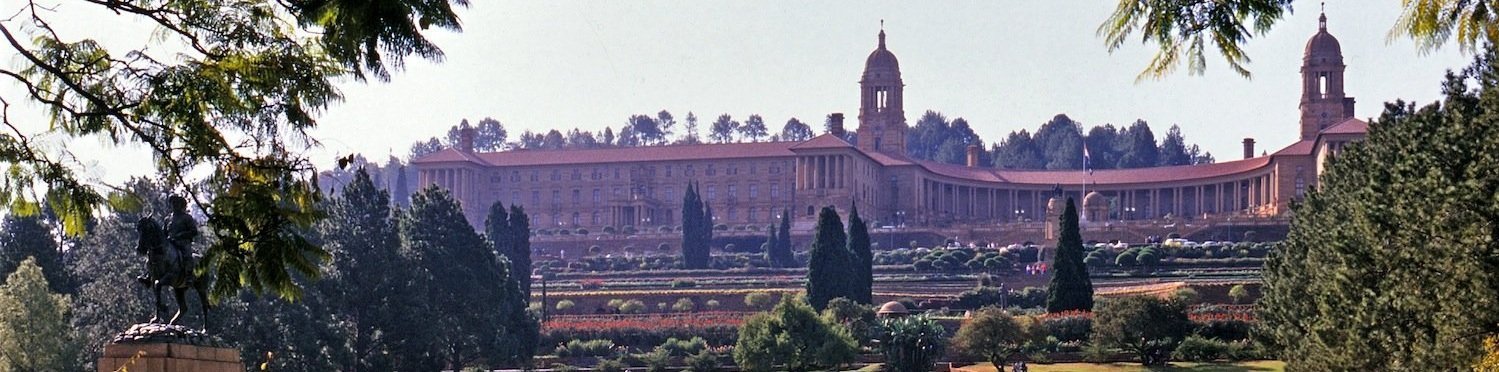
16.00 – 17.30 Visit to Union Buildings; Photocalls